Power Rangers: Legacy Wars
- 3.7
- Rating
- 50.00M
- Installs
- Free
- Price

 Analysis by App-foxy
Power Rangers: Legacy Wars is the kind of action game I open when I want a quick burst of fighting rather than a long role-playing session. It puts the Power Rangers universe into short, competitive battles, so the appeal is easy to understand: choose a team, read the opponent, use the right move, and try to turn a small opening into a win. I found it more interesting than a simple button-mashing brawler because timing and selection matter, but it also asks for patience once progression and competition become more demanding.
Developed by nWay Inc., the game is free to download and sits in the Teen category. It has been available since March 22, 2017, and its current version is 3.8.9, with support for Android 7.0 or later. Its large audience—more than 50 million installs, with an average score of 3.7 from about 451 thousand ratings—suggests that it has lasting recognition, although that score also tells me it will not satisfy everyone equally.
What to consider before choosing it
The first decision is whether you want a fast, character-focused action game or a deeper traditional fighter. This is built around the Power Rangers identity and quick encounters, not around the kind of extensive move lists, long story campaigns, or precise arcade controls that define dedicated fighting games. I enjoyed it most when I treated each match as a short tactical challenge instead of expecting a full console-style fighting experience.
You May Also Like

 Blood Strike: 2.5 Anniversary
Blood Strike’s Loadouts Turn Every Drop Into a Tactical Gamble
A close look at Blood Strike’s custom loadouts: how fast access to signature weapons reshapes its battle royale rhythm, rewards preparation, and narrows the gap between fights.

 Pandora - Music & Podcasts
Pandora’s Music Is Easy to Start, but Harder to Recover
Pandora’s strength is its low-effort path from a seed to a station. Its weak spot is how much confidence it asks you to place in connection, setup, and quiet recovery.

 8 Ball Pool
 Is Built on Rivalries, Rematches, and Routine
A close look at the rivalries, rematches, shared routines, and unanswered safety questions that turn a quick pool match into a persistent mobile community.

 Samsung Music
’s Quiet Strength Is Playing What You Already Own
Its reach comes less from spectacle than from dependable access to a personal library. That simplicity is both the app’s strongest retention engine and its ceiling.

 AccuWeather: Weather Radar
AccuWeather Review: A Quick, Clear Forecast for Everyday Decisions
For everyday plans, the best forecast is the one you can understand quickly. AccuWeather makes rain timing, radar, and local conditions easy to act on, with a few trade-offs.

 Hill Climb Racing
Why Hill Climb Racing Still Turns Crashes Into One More Run
A tiny car, a bumpy hill and one more upgrade: Hill Climb Racing keeps resurfacing because its simple chaos makes every near-miss feel personal.
More From Our News Desk



The second question is how comfortable you are with collection-based progression. Free action games often balance immediate play with long-term unlocking, and that changes the experience. Early sessions can feel accessible because the basic idea is easy to grasp. Later, improvement depends not only on reflexes but also on understanding your available fighters, choosing sensible combinations, and deciding where to invest your attention.
I also recommend thinking about your tolerance for competitive pressure. A player looking for a relaxed offline pastime may prefer a slower adventure game or a conventional beat-'em-up. Here, the excitement comes from reacting to another side and making better decisions under pressure. That makes victories satisfying, but losses can feel more personal than losing against predictable computer-controlled enemies.
There is another practical consideration: the game is free, but optional purchases range from $0.99 to $99.99 per item. I would approach the store carefully and decide in advance whether I am willing to spend anything. The most useful habit is to play enough to understand the progression before buying, because a purchase made to solve immediate frustration may not improve the parts of the game that actually bother you.
The first sessions and the basic rhythm
My first impression was that the game communicates its central loop quickly. You enter a match, watch for an opening, choose an action, and adjust when the opponent responds. That makes it suitable for short breaks: I can play a few rounds while waiting for an appointment without needing to remember a complicated plot or reconstruct a large map.
The Power Rangers theme gives the presentation a clear personality. Characters are not just anonymous combat pieces; they carry the appeal of a familiar franchise, which makes experimenting with different selections more enjoyable than it would be in an entirely generic arena. If you already have a favorite Ranger or villain, that emotional connection can make the collection aspect feel more rewarding.
Still, familiarity should not be confused with depth. The license is the invitation, not the whole reason to stay. I kept playing when I wanted to improve my decisions, not simply because the characters were recognizable. Newcomers who do not care about Power Rangers may find the combat functional but less compelling, especially if they prefer games with original worlds or a stronger narrative.
Why the combat works better when you slow down
The most useful adjustment I made was to stop treating every encounter as a race to attack. Quick reactions help, but impulsive choices can waste an opportunity. I began watching what the opposing team was trying to do, waiting briefly when an immediate response was not necessary, and thinking about the next exchange rather than only the current hit.
That approach reveals one of the game’s better qualities: it rewards awareness without requiring a long play session. A match can be brief, yet the decision-making is not necessarily shallow. I found that a player who recognizes patterns and controls their enthusiasm can outperform someone who simply chooses the most obvious action every time.
A practical tip is to test one change at a time. If I alter the whole team after a loss, I cannot tell whether the problem was my timing, a poor matchup, or an unfamiliar character. Keeping most of my setup stable while changing one element gives me a clearer sense of what actually improved. This is especially helpful for players who feel that progress has suddenly slowed.
Building a routine instead of chasing every unlock
The collection side can encourage constant switching, but I found a small, repeatable routine more useful. I would choose a core group that felt comfortable, play enough matches to identify its weaknesses, and only then explore alternatives. This reduces the temptation to spread attention across every available option before understanding any of them properly.
That workflow also helps answer a common concern: do you need to unlock everything to enjoy the game? In my experience, no. You can have fun with a familiar group and gradually learn what suits your style. However, players who want to compete seriously may feel pressure to keep developing their roster, because variety matters when a preferred approach stops working.
I would not spend resources simply because a new character looks exciting. First, I would ask whether that character fills a role I currently lack or merely duplicates something I already understand. The more useful unlock is often the one that gives me a new way to handle a difficult situation, not necessarily the one with the flashiest presentation.
Where this game wins against familiar alternatives
Compared with a standard beat-'em-up, this game gives me more reason to think about the opponent. A traditional side-scrolling brawler is usually better when I want constant movement, predictable enemies, and a straightforward path through stages. Legacy Wars is stronger when I want short confrontations where adaptation matters.
Compared with a large role-playing game, it is much easier to pick up for a few minutes. I do not need to manage a broad world, follow a lengthy quest chain, or remember a complicated story before playing. That compact structure is a genuine advantage for phone gaming, particularly when my available time is fragmented.
Compared with a dedicated competitive fighter, it is more approachable for someone who likes the idea of fighting games but does not want to learn a large technical command system. The trade-off is that it may feel less satisfying to experts who want highly precise execution, extensive training tools, or the same kind of control found in a console-focused fighter.
The Power Rangers setting is another clear advantage. Many action games can offer fast matches, but this one gives those matches a recognizable cast and a sense of collecting from a specific universe. That makes it easier to recommend to a fan who wants the license to influence the experience rather than appear as a thin visual theme.
Where another type of game may fit better
I would point a player toward a conventional single-player action game if they mainly want a calm, predictable experience. The competitive structure here creates more tension, and that tension is not always welcome after a tiring day. If your ideal mobile session is simply moving through levels at your own pace, this may feel more demanding than necessary.
I would also suggest a different option to someone who dislikes collection systems or does not want progression to shape their enjoyment. Even when the individual matches are entertaining, the long-term loop naturally encourages attention to the roster. A player who wants every match to stand completely apart from unlocking and development may be happier with a premium game built around a fixed campaign.
Fans seeking a substantial story should keep their expectations measured. The strongest reason to play is the battle loop and the Power Rangers cast, not a rich narrative journey. If story choices, exploration, and character development are your main priorities, an adventure or role-playing title will probably serve you better.
There is also a difference between liking the franchise and liking competitive mobile design. A Power Rangers fan can still dislike repeated matches, progression pressure, or the emotional swing of losing. I would not recommend downloading it solely because the name is familiar; I would recommend it when that familiarity is combined with an interest in quick tactical competition.
Managing purchases and the cost of changing your mind
The free entry point makes trying the game straightforward, but the real cost of switching depends on what you expect from it. If you only want occasional matches, you can test the experience without committing money. If you decide to build a serious collection, the temptation to spend can become part of the decision, and that is where I think a little discipline matters.
My advice is to set a personal limit before playing regularly and to avoid buying immediately after a frustrating loss. A purchase should support a clear plan, such as exploring a play style you genuinely enjoy, rather than acting as a quick response to feeling underpowered. This does not remove every progression concern, but it keeps the financial side under your control.
Switching to another game is inexpensive in one sense because this title is free, but there is still a time cost. Learning a roster, developing reliable habits, and understanding why certain matches go badly all take attention. If you already enjoy the combat, moving away at the first difficult stretch may mean abandoning a game that could become more satisfying with a more deliberate approach.
On the other hand, persistence is not always the right answer. If your main objection is the competitive format itself, more practice will not transform it into a story-driven adventure. The best test is to identify the source of frustration: if it is unfamiliar controls or poor decision-making, practice may help; if it is the entire progression model, another category is likely a better use of your time.
Who should install it
I think this is a good fit for Power Rangers fans who want active matches rather than a passive collection experience. It also suits mobile players who enjoy short sessions, learning through repeated attempts, and gradually finding a team that feels natural. The Teen rating is worth noting for families, so I would check that it matches the intended player before installing it.
It is particularly appealing if you enjoy making small tactical adjustments. For example, if I have only a few minutes before leaving home, I can play a match and still learn something useful from it: perhaps I attacked too early, relied too heavily on one approach, or failed to recognize a recurring pattern. That sense of a compact lesson gives the game more staying power than a purely reflex-based distraction.
I would skip it if you want a completely offline-feeling game, dislike competitive losses, or expect the depth of a major console fighter. I would also skip it if the Power Rangers theme does nothing for you and you are searching only for the most mechanically demanding action game available on mobile. In those cases, the game’s particular combination of license, quick matches, and progression may not be enough.
My recommendation after spending time with it
The best way to approach Legacy Wars is as a focused mobile fighting game, not as a replacement for every other Power Rangers game or every traditional fighter. Its strengths are the recognizable roster, quick match structure, and the way careful choices can matter within a short session. I like that it can fit naturally into an ordinary day without requiring a long uninterrupted appointment.
Its limitations are equally important. The free-to-play structure can make progression feel like something you must manage, and the competitive format will not appeal to everyone. The average rating of 3.7 reflects that mixed experience: there is a substantial audience, but the game’s design clearly creates different reactions depending on how much a player enjoys collection-driven competition.
If I were recommending it to a friend, I would say: install it if you are a Power Rangers fan or if you want a compact action game that rewards observation and repeated practice. Play for a while before considering purchases, build familiarity with a small group instead of chasing every option, and judge the game by the quality of its matches rather than by the excitement of unlocking something new.
For me, that makes it worth trying, with a clear condition: it is most enjoyable when you want quick tactical battles and are comfortable treating progression as a long-term choice. Players seeking a relaxed campaign, a deep technical fighter, or a completely fixed progression path should choose another style of game. Everyone else can find a surprisingly engaging mobile action experience here, provided the Power Rangers theme and competitive rhythm genuinely match what they want to play.
FAQs for Power Rangers: Legacy Wars
01What is Power Rangers: Legacy Wars?
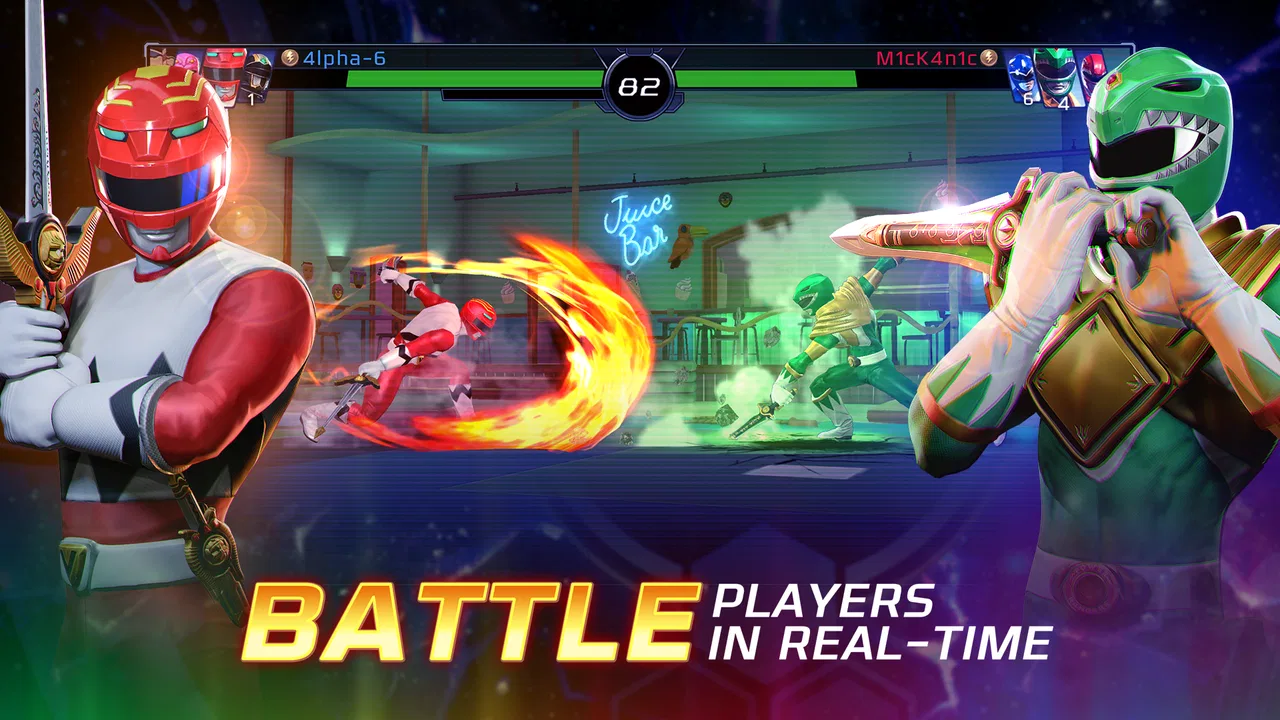
Power Rangers: Legacy Wars is a real-time multiplayer fighting game for Android and iOS. It brings together Rangers, villains, and characters from different Power Rangers eras, allowing you to build a team and battle other players in short arena matches. The gameplay focuses on choosing attacks, blocking, dodging, and combining character abilities at the right moment rather than simply tapping continuously.
02Is Power Rangers: Legacy Wars free to download and play?
Yes, Power Rangers: Legacy Wars is free to download and offers optional in-app purchases. You can unlock and upgrade characters through normal play, events, missions, and rewards, but purchases may speed up progression or provide additional resources. The game also uses online services, so an internet connection is generally required for battles, account synchronization, events, and other important features.
03Does Power Rangers: Legacy Wars require an internet connection?
Yes, an active internet connection is needed for most of the experience. Since the main feature is real-time competition against other players, matches depend on online servers and a stable connection. Playing over weak Wi-Fi or mobile data can lead to delays, disconnections, or an unfair match result. It is therefore not a suitable choice if you are looking for a fully offline fighting game.
04Is Power Rangers: Legacy Wars suitable for children?
The game is designed around colorful superhero battles and is generally accessible to younger Power Rangers fans, but parents should still review its online and purchase features. It includes competitive multiplayer, chat or social interactions depending on the current version, advertisements or promotions, and optional in-app purchases. Parental controls, purchase restrictions, and supervision are recommended, especially for younger children using a shared device.
05Can I play Power Rangers: Legacy Wars without spending money?
You can play without making purchases, but progression may require patience. Free players can earn characters, upgrade materials, and other rewards through battles, challenges, events, and daily activities. However, stronger opponents and upgrade requirements can make advancement slower over time, while paid options may offer quicker access to resources. Success still depends on timing and strategy, although collection and progression systems influence the experience.
Pros
- Fast
- real-time PvP battles are easy to learn but difficult to master.
- Large roster includes Rangers and villains from multiple Power Rangers eras.
- Team-building encourages experimentation with different fighters and abilities.
- Regular events and challenges provide goals beyond standard ranked matches.
- Distinct character animations and voice effects make battles feel authentic.
Cons
- Progression can feel slow without spending money on upgrades and resources.
- Matchmaking may pair newer players against significantly stronger teams.
- Energy and upgrade resources can limit how long you play in one session.
- Some battles feel influenced by card levels rather than player skill alone.
- The interface can become crowded with currencies
- offers
- and promotional pop-ups.

Power Rangers: Legacy Wars
Gallery